
NS Tools Blog
Tips, guides & insights: nameserver changes, DNS records, propagation, email authentication and troubleshooting, written to be followed step by step.
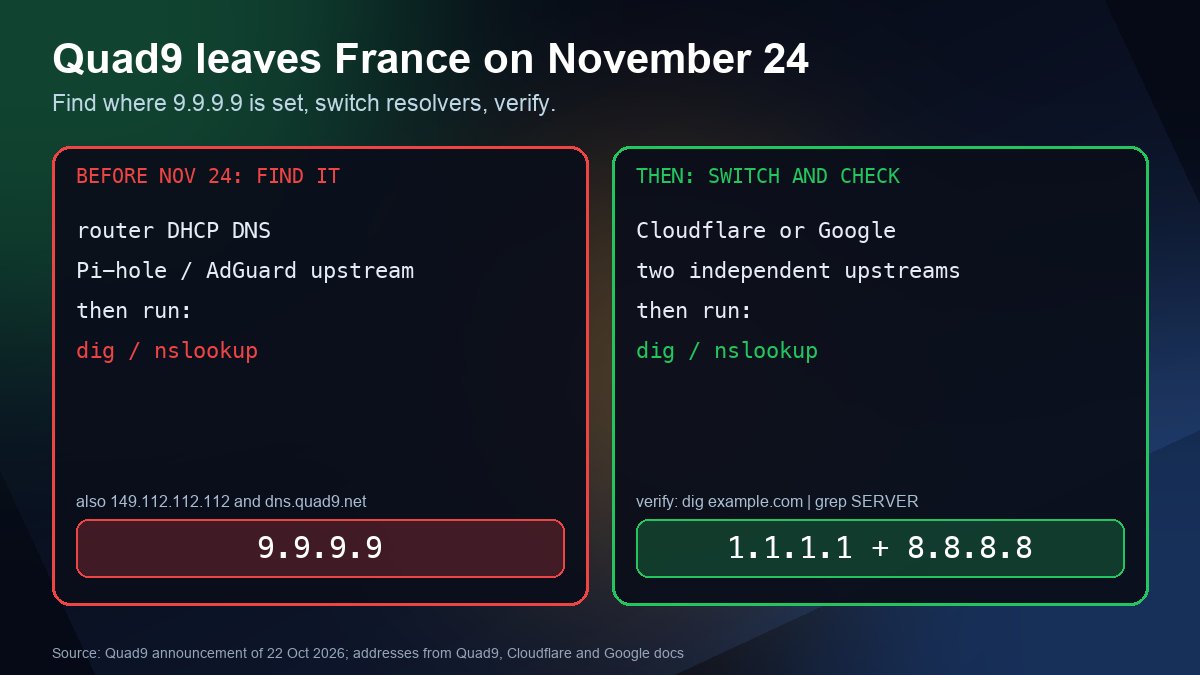
Quad9 Is Leaving France on Nov 24: What to Use Instead
Quad9 will stop serving users in France on November 24, 2026. Find every place 9.9.9.9 is configured, pick a replacement and verify the switch with a few commands.
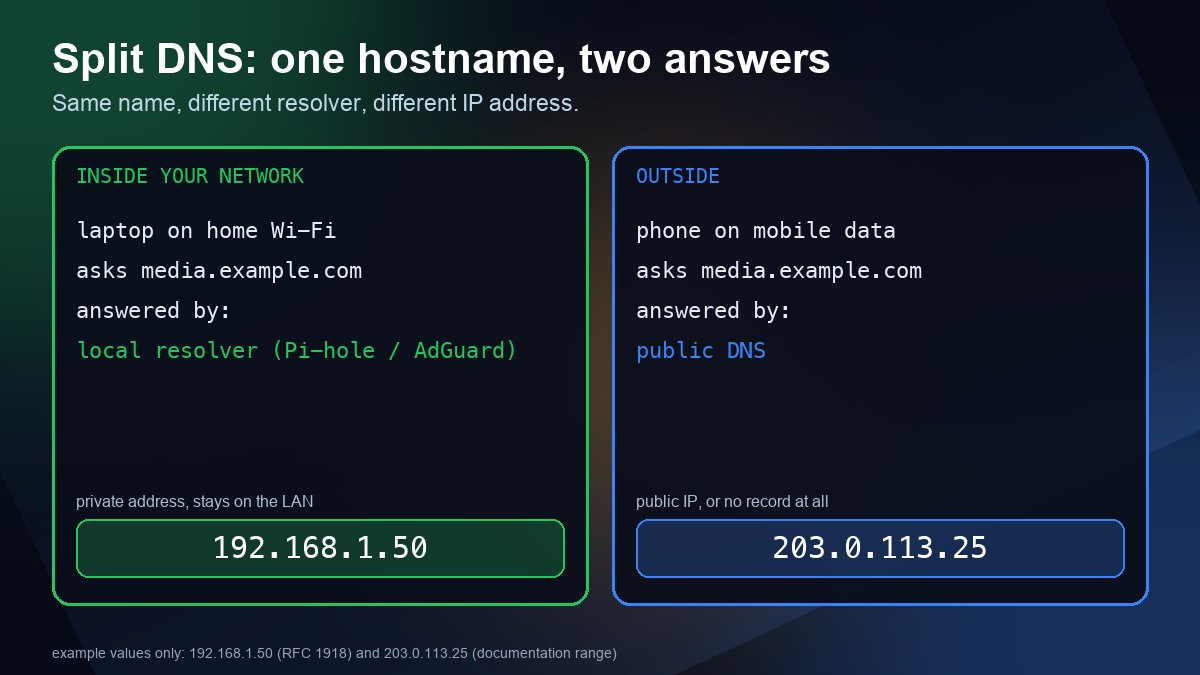
Split DNS for a Home Server: One Hostname, Two Answers
Make media.example.com resolve to a private IP at home and to your public address everywhere else. See how to set it up with Pi-hole, AdGuard Home, dnsmasq or Unbound, and why a browser setting often breaks it.
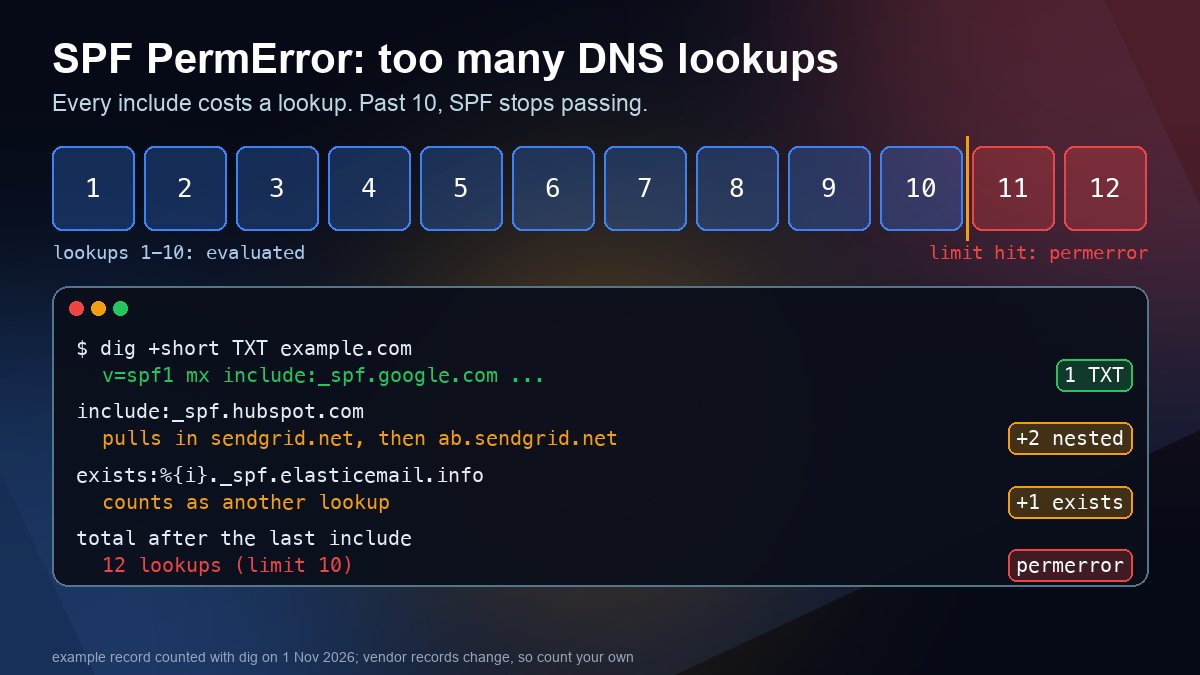
SPF PermError: Too Many DNS Lookups (the 10-Lookup Limit) and How to Fix It
Your SPF record is capped at 10 DNS lookups. See what counts, why nested includes blow the budget, a real 12-lookup count measured with dig, and five ways to get back under the limit.
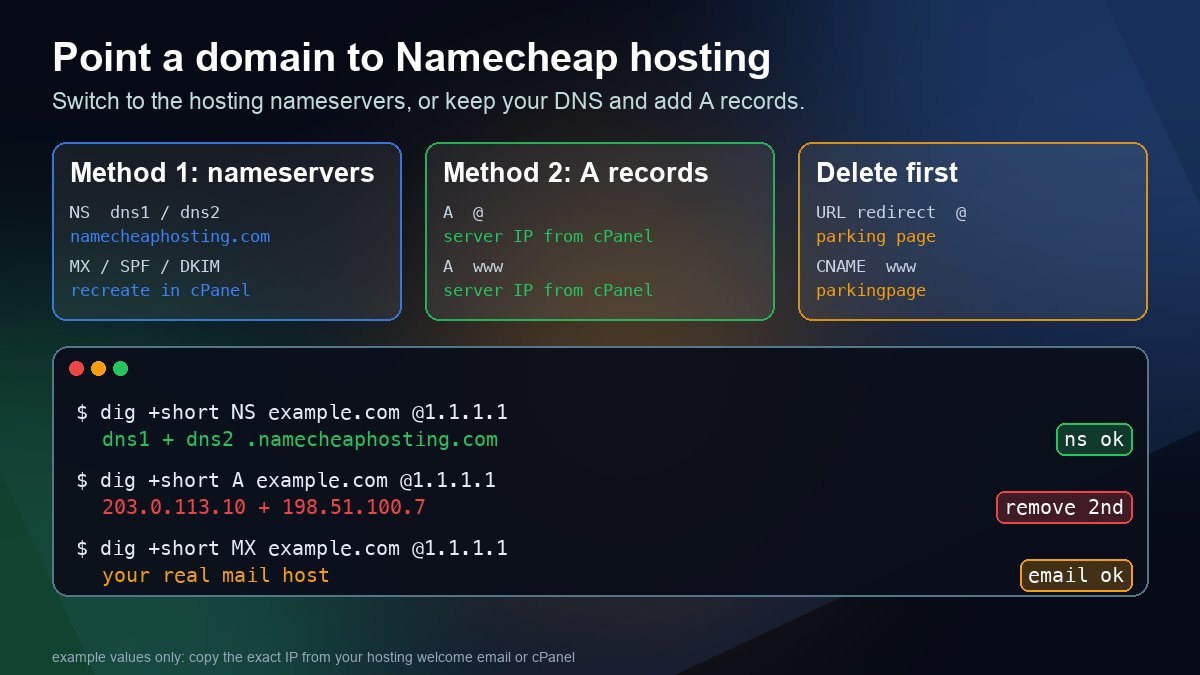
How to Point a Domain to Namecheap Hosting (and Keep Email Working)
Two ways to connect a domain to Namecheap shared hosting: switch to the Web Hosting DNS nameservers, or keep your DNS and add A records. What each does to your email, and how to check it with dig.
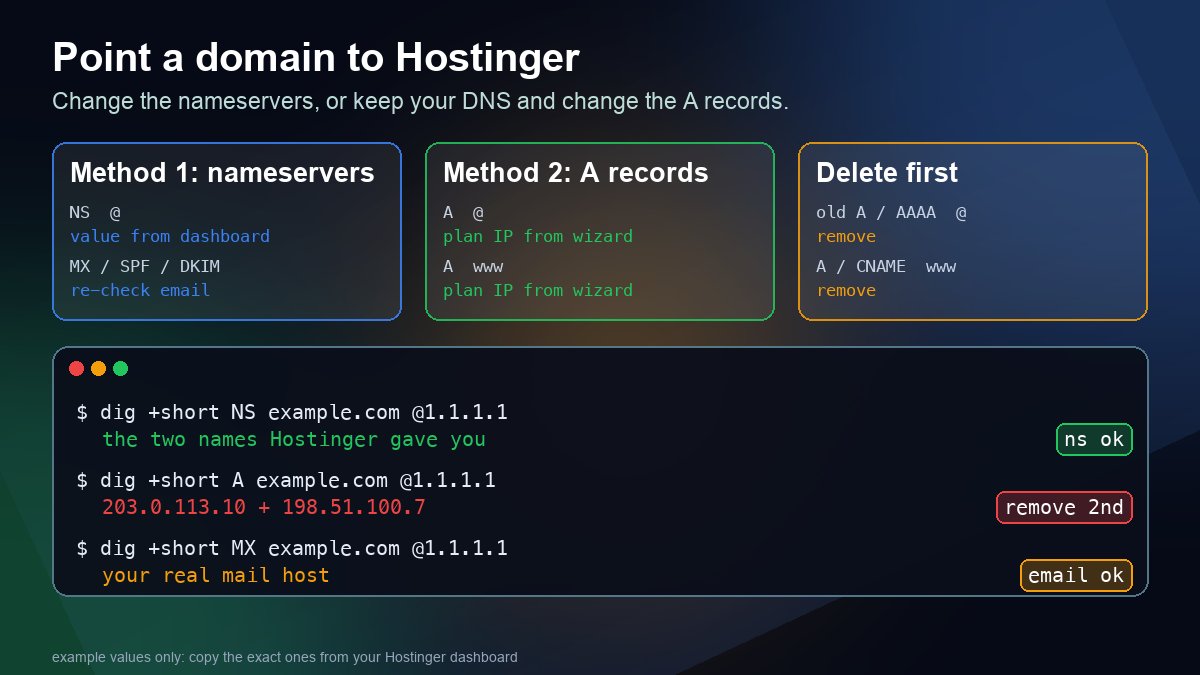
How to Point a Domain to Hostinger: Nameservers vs A Record
Two ways to connect a domain to Hostinger hosting: change the nameservers, or keep your DNS and change the A records. What to pick, what each does to email, and how to check it with dig.
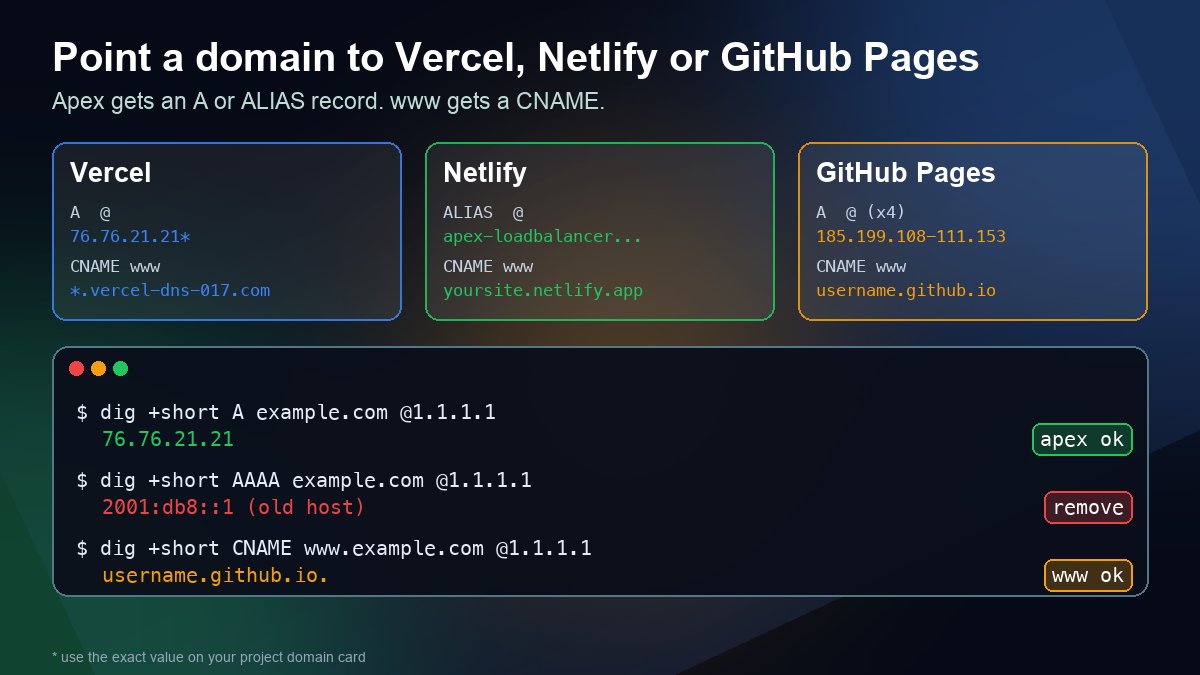
How to Point a Domain to Vercel, Netlify or GitHub Pages (A vs CNAME vs ALIAS)
The exact DNS records for Vercel, Netlify and GitHub Pages: an A or ALIAS record for the apex, a CNAME for www, the records to delete, and how to check it all with dig.
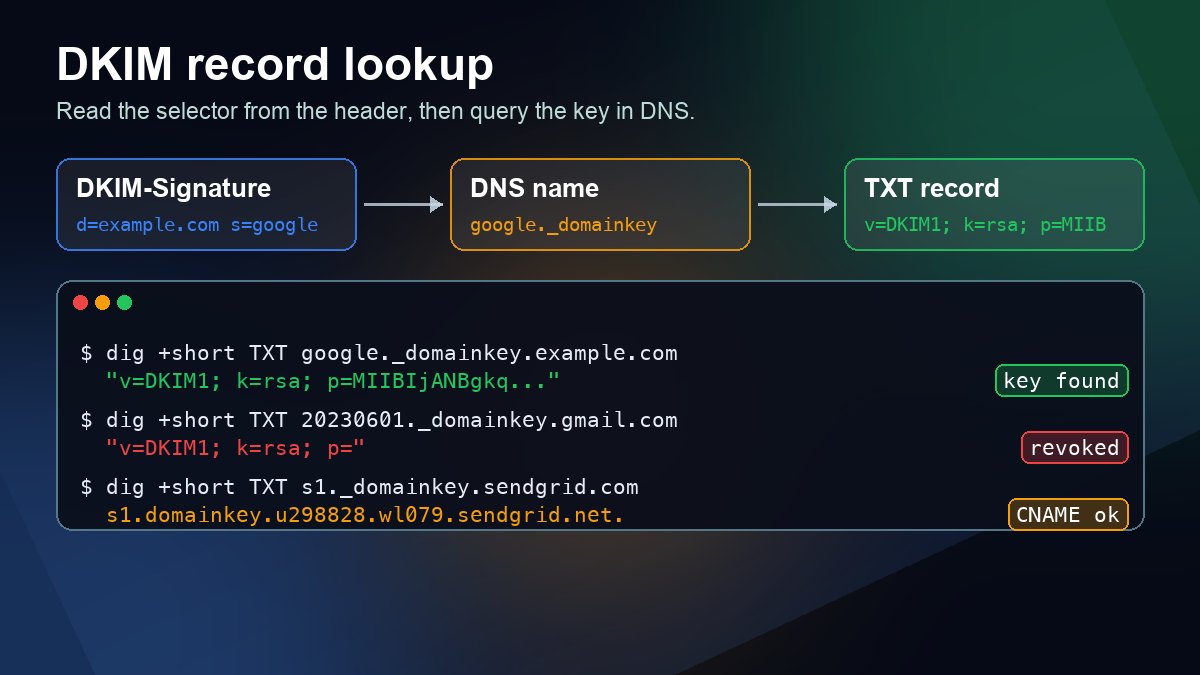
DKIM Record Lookup: Find Your Selector and Verify the Key
Find the DKIM selector in a message header, look up selector._domainkey with dig, nslookup or PowerShell, read the key tags, and fix the failures that break DKIM and DMARC.
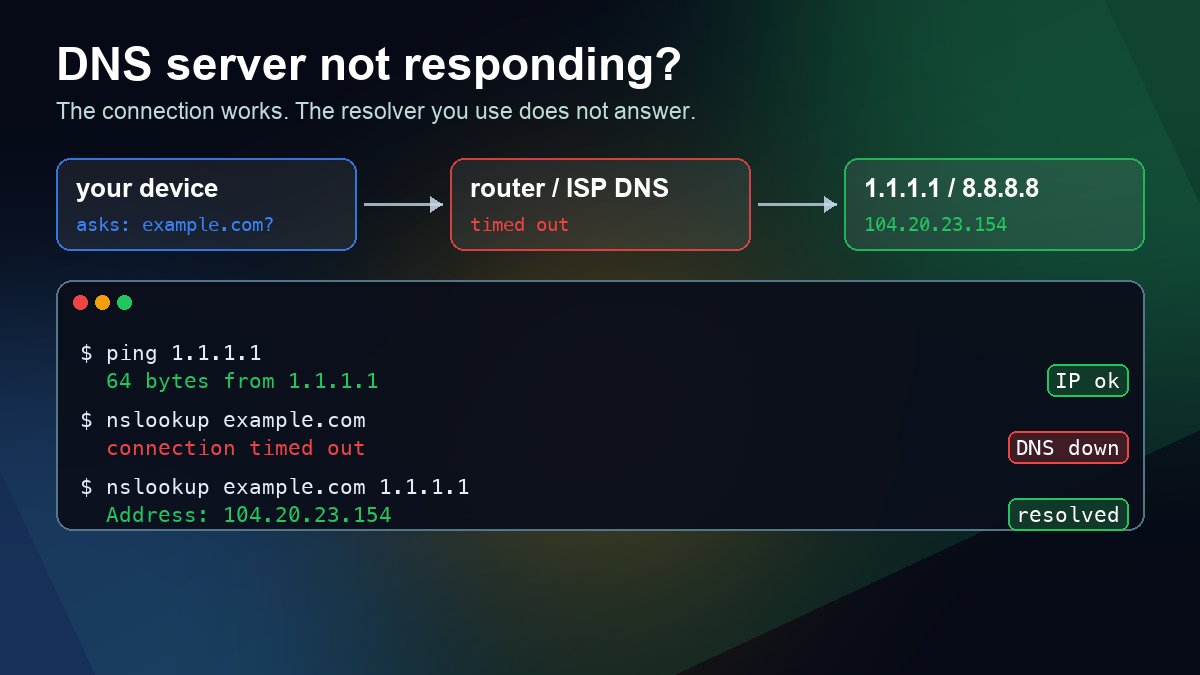
DNS Server Not Responding: What It Means and How to Fix It
A six-step order of checks for the DNS server not responding error: prove it is DNS, find the resolver you use, test 1.1.1.1 and 8.8.8.8, then fix it on Windows, macOS, Linux or the router.
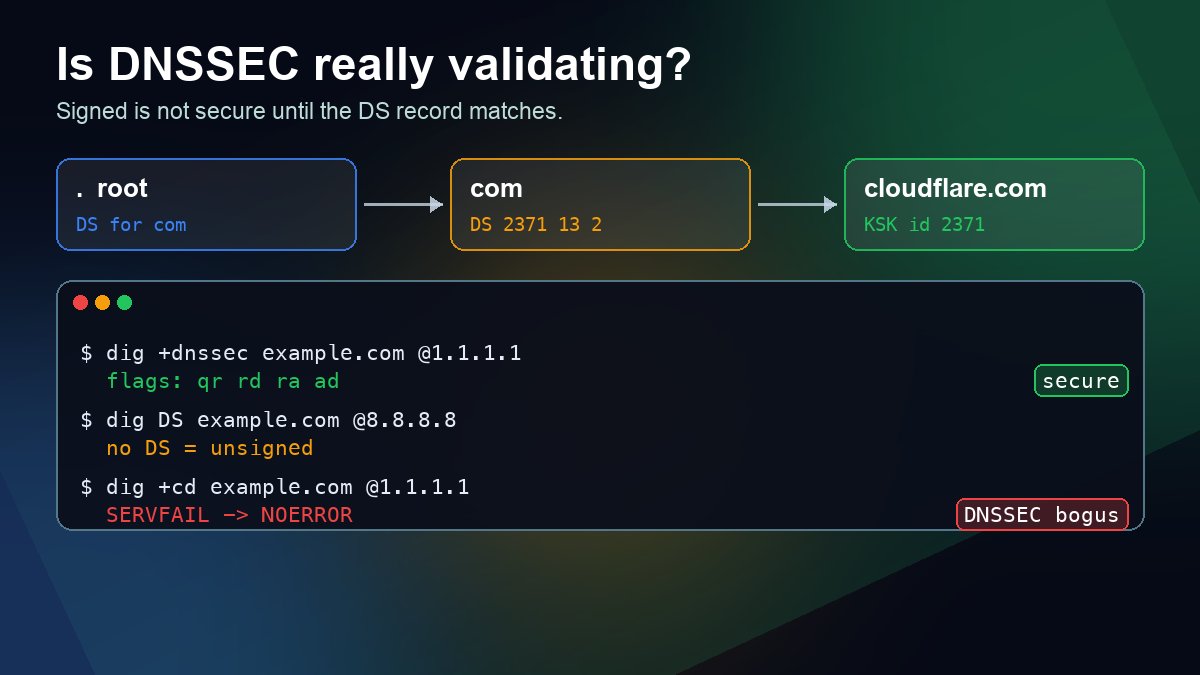
How to Check if a Domain Is DNSSEC-Signed (and Actually Validating)
Four dig checks (the ad flag, the DS record, the DNSKEY match and the authoritative answer) that show whether a domain is secure, unsigned or broken, plus how to prove DNSSEC is behind a SERVFAIL.
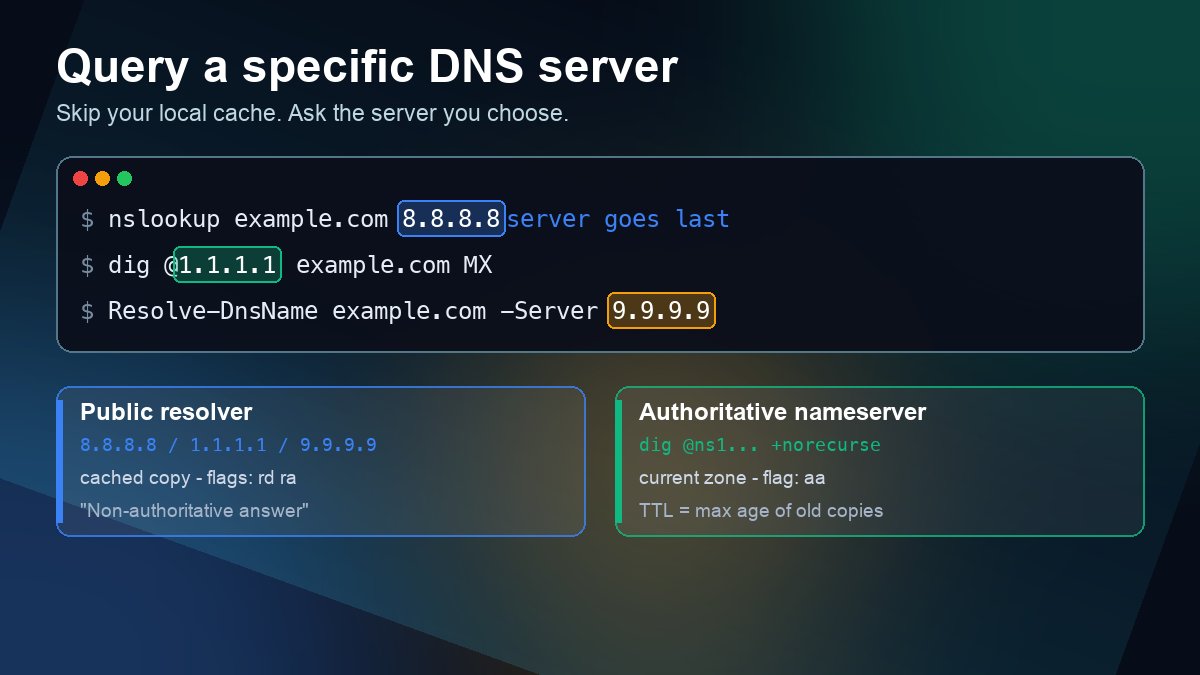
How to Query a Specific DNS Server With nslookup (and dig)
Point nslookup, dig or Resolve-DnsName at Google, Cloudflare or a domain’s own nameserver, read the answer correctly, and tell a stale cache from a real DNS problem.
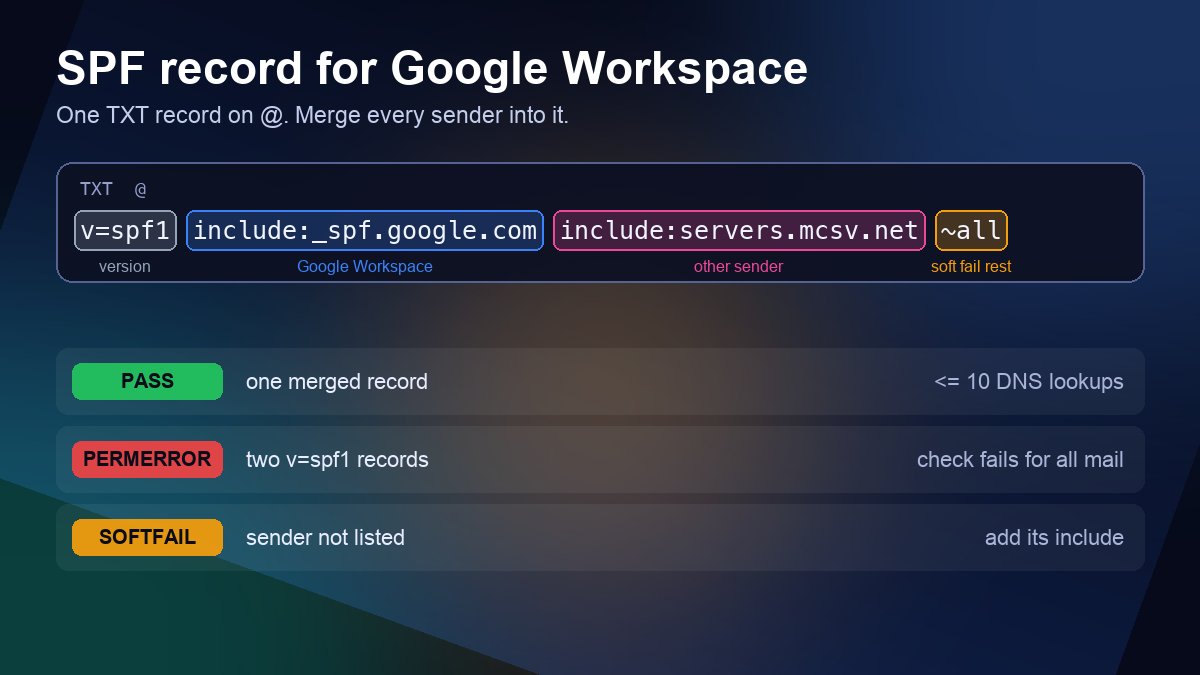
SPF Record for Google Workspace: The Exact Value and How to Merge It
The exact SPF record Google Workspace needs, where to add it, how to merge it with Microsoft 365, Mailchimp or SES without a second record, and how to confirm spf=pass.
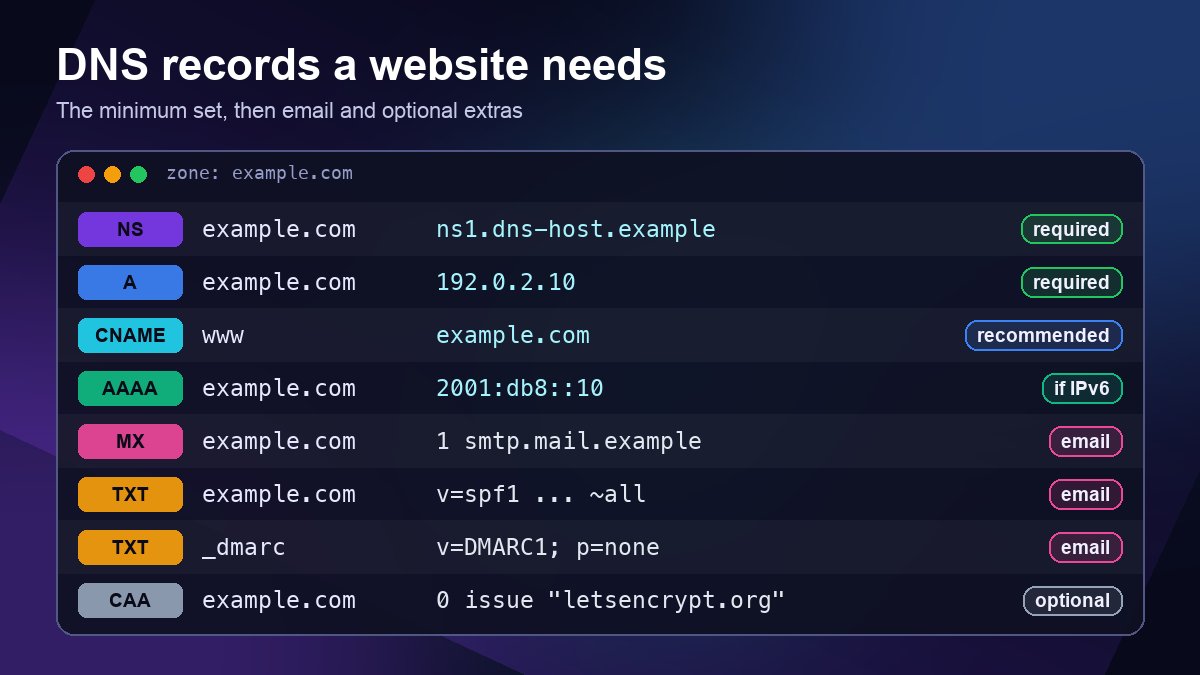
What DNS Records Does a Website Need? The Minimum Set Explained
Which DNS records a website actually needs: nameservers, A/AAAA, www, then MX, SPF, DKIM and DMARC for email, plus optional CAA, with a minimal zone you can adapt.
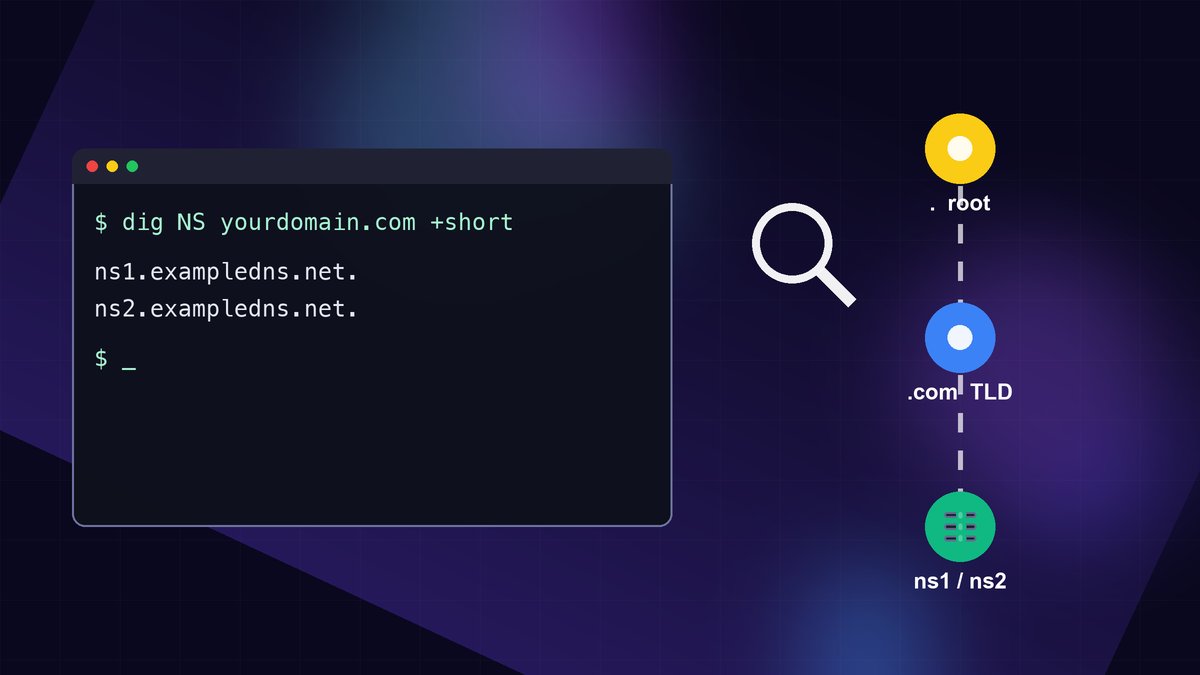
How to Check What Nameservers a Domain Is Using
Find any domain's nameservers in seconds with dig, nslookup, PowerShell, WHOIS or a direct TLD query, and learn why different tools sometimes disagree.

What Are Nameservers and How Do They Work? (Plain-English Guide)
Nameservers tell the internet where a domain's DNS records live. Here is how delegation from the root to .com to your DNS host works, the four server roles involved, and how to check a domain's nameservers in seconds.

How to Change Nameservers Without Downtime (Step-by-Step, 2026)
A safe order of operations for changing a domain's nameservers: copy the zone, handle DNSSEC first, switch at the registrar, then verify at the registry. Includes where the setting lives at GoDaddy, Namecheap and Squarespace Domains.

DNS Propagation Explained: How Long It Really Takes and How to Check
DNS changes don't spread like a broadcast; old answers expire from caches according to their TTL. Here is how long record changes and nameserver changes really take, how to check them, and how to clear the caches you control.

How to Speed Up DNS Lookup for Faster Websites
Slow DNS lookups add latency to every page load. Learn practical techniques to reduce DNS resolution time and improve your website speed.

IPv6 DNS Configuration: A Complete Guide
IPv6 adoption is accelerating. Learn how to configure AAAA records, dual-stack DNS, and ensure your domain works seamlessly with IPv6.

A Record vs CNAME: When to Use Which
A records and CNAME records are the two most common DNS record types. Learn the key differences and when to use each one.

Email Deliverability and DNS Records: What You Need to Know
Your DNS records directly impact whether your emails land in the inbox or spam folder. Learn which records matter and how to configure them correctly.

How to Set Up MX Records for Email
MX records control where your domain receives email. Learn how to configure them correctly for Gmail, Outlook, and other providers.

SPF, DKIM, and DMARC Setup Guide: Protect Your Email Domain
A practical, step-by-step guide to setting up SPF, DKIM, and DMARC records to authenticate your email and prevent spoofing.

Cloudflare DNS Setup Guide: From Zero to Protected
Cloudflare offers free DNS hosting with DDoS protection and blazing-fast performance. Here is how to set it up for your domain.

Subdomain vs Subdirectory for SEO: Which Is Better?
Should your blog live at blog.example.com or example.com/blog? This guide explains the DNS and SEO implications of each approach.

Domain Transfer Checklist: Everything You Need to Know
Transferring a domain between registrars? Follow this comprehensive checklist to avoid downtime and lost email.

How CDN and DNS Work Together to Speed Up Your Site
CDNs rely on DNS to route users to the nearest edge server. Learn how CDN DNS integration works, from CNAME setup to anycast routing.

DNS Load Balancing Explained: How It Works and When to Use It
DNS load balancing distributes traffic across multiple servers using DNS responses. Learn the techniques, benefits, and limitations.

DNS Security: DNSSEC Explained
DNSSEC adds a layer of trust to DNS by digitally signing records. Learn what it is, how it works, and whether you should enable it.

Reverse DNS Lookup: What It Is and Why It Matters
Reverse DNS maps IP addresses back to domain names. Learn how PTR records work and why reverse DNS matters for email, security, and troubleshooting.

How to Fix DNS_PROBE_FINISHED_NXDOMAIN
Getting the DNS_PROBE_FINISHED_NXDOMAIN error? This guide covers all the causes and fixes, from simple browser fixes to DNS configuration issues.

DNS over HTTPS (DoH) Explained: Privacy, Security, and Setup
DNS over HTTPS encrypts your DNS queries to prevent eavesdropping and manipulation. Learn how DoH works and how to enable it.

Best Free DNS Providers Compared (2026)
Looking for free DNS hosting? We compare the top free DNS providers including Cloudflare, Hurricane Electric, and Hetzner on speed, features, and reliability.

Common DNS Errors and How to Fix Them
From NXDOMAIN to SERVFAIL, DNS errors can be confusing. This guide explains the most common DNS errors, their causes, and step-by-step fixes.